Focus keyword: PCOD vs PCOS
Many women are told they have either PCOD (Polycystic Ovarian Disease) or PCOS (Polycystic Ovary Syndrome), but are often confused about what the real difference is. Although these terms are frequently used interchangeably, they are not exactly the same condition. Understanding the difference between PCOD and PCOS is important for correct treatment, fertility planning, and long-term health.
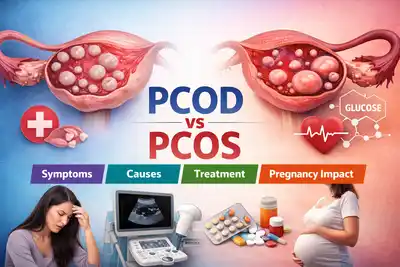
What is PCOD?
PCOD is a hormonal disorder where the ovaries produce many immature or partially mature eggs, which later become cysts. This leads to enlarged ovaries and hormonal imbalance, especially increased androgens (male hormones). PCOD is extremely common in Indian women and is often related to lifestyle factors such as weight gain, insulin resistance, stress, and poor dietary habits.
What is PCOS?
PCOS is a more severe endocrine and metabolic disorder affecting hormone levels, ovulation, insulin metabolism, and even cardiovascular health. It is considered a systemic condition rather than only an ovarian disorder. Women with PCOS often have chronic anovulation, hyperandrogenism, insulin resistance, and increased long-term risks like diabetes and heart disease.
Difference Between PCOD and PCOS
| Feature | PCOD | PCOS |
|---|---|---|
| Nature | Ovarian disorder | Endocrine-metabolic syndrome |
| Severity | Milder | More severe |
| Ovulation | May be irregular | Often absent |
| Fertility | Usually preserved | Often reduced |
| Long-term risks | Minimal | Diabetes, heart disease |
PCOD vs PCOS Symptoms
- Irregular or absent periods
- Weight gain, especially around the abdomen
- Acne and oily skin
- Excess facial or body hair
- Hair thinning or hair fall
- Difficulty in conceiving
Causes of PCOD and PCOS
The exact cause is unknown, but contributing factors include genetic predisposition, insulin resistance, obesity, sedentary lifestyle, stress, and poor dietary patterns. PCOS has a stronger genetic and metabolic basis compared to PCOD.
Diagnosis: PCOD vs PCOS
Diagnosis is based on symptoms, blood hormone tests, and pelvic ultrasound. The Rotterdam Criteria is commonly used to diagnose PCOS. Ultrasound may show enlarged ovaries with multiple small follicles arranged in a “string of pearls” pattern.
Treatment for PCOD and PCOS
- Lifestyle modification (diet, exercise, weight loss)
- Hormonal regulation using oral contraceptive pills
- Insulin-sensitizing drugs like metformin
- Ovulation induction for infertility
- Treatment of acne and hirsutism
Pregnancy Impact of PCOD and PCOS
Most women with PCOD conceive naturally or with minimal treatment. Women with PCOS may face difficulty due to irregular ovulation and higher miscarriage risk. With proper management, ovulation induction and lifestyle changes, pregnancy is very much possible.
Long-Term Health Risks of PCOS
- Type 2 diabetes
- Hypertension
- Cardiovascular disease
- Endometrial hyperplasia and cancer
- Depression and anxiety
Frequently Asked Questions
1. Is PCOD same as PCOS?
No. PCOD is milder and limited to ovarian dysfunction, while PCOS is a systemic endocrine disorder with metabolic and long-term health implications.
2. Can PCOS be cured permanently?
There is no permanent cure, but symptoms can be effectively controlled with lifestyle changes and medical treatment.
3. Can I get pregnant if I have PCOS?
Yes. With proper medical guidance, most women with PCOS can conceive.
4. Which is more serious: PCOD or PCOS?
PCOS is more serious because of its metabolic and cardiovascular risks.
Authoritative References
