Endometriosis is a chronic gynecological condition in which tissue similar to the lining of the uterus (endometrium) grows outside the uterus. This misplaced tissue can cause inflammation, pain, scarring, and fertility problems. Endometriosis affects millions of women worldwide and is one of the most common causes of chronic pelvic pain and infertility.
What Is Endometriosis?
In endometriosis, endometrial-like tissue grows on the ovaries, fallopian tubes, pelvic ligaments, bowel, bladder, or the outer surface of the uterus. Unlike normal uterine lining, this tissue has no way to exit the body during menstruation, leading to inflammation, cyst formation, adhesions, and nerve irritation.
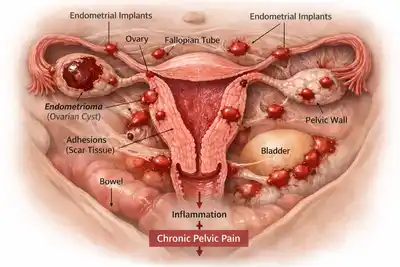
Common Symptoms of Endometriosis
- Severe menstrual cramps (dysmenorrhea)
- Chronic pelvic pain
- Pain during or after sexual intercourse
- Pain during bowel movements or urination
- Heavy or irregular menstrual bleeding
- Infertility or difficulty conceiving
- Fatigue, bloating, nausea, especially during periods
Some women with endometriosis have minimal symptoms, while others experience debilitating pain that interferes with daily life.
Causes and Risk Factors
The exact cause of endometriosis is not fully understood. Several theories include:
- Retrograde menstruation (backward flow of menstrual blood into the pelvis)
- Immune system dysfunction
- Hormonal imbalances, especially excess estrogen
- Genetic predisposition
- Transformation of peritoneal cells into endometrial tissue
Risk factors include early onset of menstruation, short menstrual cycles, family history of endometriosis, and delayed childbirth.
How Is Endometriosis Diagnosed?
Diagnosis of endometriosis often begins with a detailed medical history and pelvic examination. Imaging tests such as ultrasound and MRI can help identify ovarian endometriomas, but small lesions are often missed.
The gold standard for diagnosis is laparoscopy, a minimally invasive surgical procedure that allows direct visualization and biopsy of endometriotic tissue.
Treatment Options for Endometriosis
1. Pain Management
Nonsteroidal anti-inflammatory drugs (NSAIDs) are commonly used to manage pain and inflammation.
2. Hormonal Therapy
- Combined oral contraceptives
- Progestins
- GnRH agonists and antagonists
- Levonorgestrel-releasing intrauterine system
Hormonal treatment aims to suppress ovulation and reduce estrogen levels to limit lesion growth.
3. Surgical Treatment
Laparoscopic excision or ablation of endometriotic lesions is recommended for severe cases, persistent pain, or infertility related to endometriosis.
4. Fertility Treatment
Assisted reproductive techniques such as IVF may be recommended when endometriosis affects fertility.
Endometriosis and Infertility
Endometriosis can impair fertility by causing pelvic adhesions, ovarian damage, tubal blockage, and inflammatory changes that affect egg quality and implantation.
Living With Endometriosis
Endometriosis is a long-term condition that requires ongoing management. Lifestyle changes such as regular exercise, balanced diet, stress management, and adequate sleep may help improve symptoms.
When to See a Doctor
If you experience severe period pain, chronic pelvic pain, or difficulty conceiving, consult a gynecologist for evaluation. Early diagnosis and treatment can prevent disease progression and improve quality of life.
Frequently Asked Questions (FAQs)
Is endometriosis curable?
There is no permanent cure, but treatments can effectively control symptoms and disease progression.
Can endometriosis go away after menopause?
Symptoms often improve after menopause due to lower estrogen levels, but it does not always disappear completely.
Can I get pregnant if I have endometriosis?
Yes, many women with endometriosis conceive naturally or with fertility treatments.
Is endometriosis cancer?
No, endometriosis is a benign condition, although it can behave aggressively and cause significant symptoms.
Does pregnancy cure endometriosis?
Pregnancy may temporarily reduce symptoms, but it is not a cure.
Read more
Endometriosis: Causes, Symptoms, Diagnosis and Treatment
Endometriosis Treatment Options: Medicines, Surgery & Fertility Care
Deep Infiltrating Endometriosis: Diagnosis and Treatment
Endometriosis and Infertility: Can You Get Pregnant?
Adenomyosis vs Endometriosis: Key Differences, Symptoms, Diagnosis & Treatment
Diet for Endometriosis: Best Foods, Foods to Avoid & Anti-Inflammatory Nutrition Guide
Authoritative External References
- World Health Organization – Endometriosis
- American College of Obstetricians and Gynecologists (ACOG)
- NHS – Endometriosis
Authoritative video link

