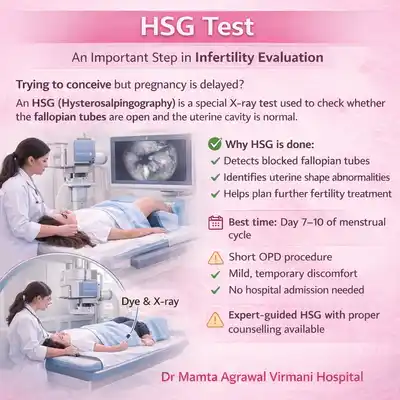
The HSG test, medically known as Hysterosalpingography, is a specialized X-ray procedure used to evaluate the uterus and fallopian tubes in women facing infertility issues. It plays a crucial role in identifying blocked fallopian tubes, uterine abnormalities, and causes of unexplained infertility.
What Is an HSG Test?
An HSG test is a radiological investigation in which a contrast dye is injected into the uterus through the cervix, followed by X-ray imaging. The dye outlines the uterine cavity and fallopian tubes, allowing doctors to assess their shape and patency.
This test is commonly advised as an early investigation during infertility evaluation.
Why Is HSG Test Done?
- To check blocked fallopian tubes
- To detect uterine abnormalities such as fibroids, polyps, or adhesions
- To investigate causes of infertility or recurrent miscarriages
- To assess uterine shape (septate uterus, bicornuate uterus)
When Is the Best Time for HSG Test?
The HSG test is done between Day 7 and Day 10 of the menstrual cycle, after menstrual bleeding has stopped but before ovulation. This timing ensures that:
- Pregnancy is ruled out
- The uterine lining is thin for clearer imaging
HSG Test Procedure Step by Step
- You will lie on an X-ray table similar to a gynecological examination.
- A speculum is inserted to visualize the cervix.
- A thin catheter is passed into the uterus.
- Contrast dye is slowly injected.
- X-ray images are taken as dye flows through uterus and tubes.
The entire HSG procedure usually takes 10–15 minutes.
laparoscopic gynecological procedure
Is HSG Test Painful?
HSG test pain varies from woman to woman. Most experience mild to moderate cramping similar to period pain. The discomfort lasts only a few minutes.
Pain is usually more if:
- Fallopian tubes are blocked
- There is cervical tightness
- There is pelvic infection or adhesions
Your doctor may prescribe painkillers before the procedure to reduce discomfort.
HSG Test Results and Interpretation
Normal HSG Report
- Normal uterine cavity
- Free spill of dye from both fallopian tubes
Abnormal HSG Report
- Blocked fallopian tubes (unilateral or bilateral)
- Hydrosalpinx
- Uterine septum or adhesions
- Submucous fibroids or polyps
Can HSG Increase Chances of Pregnancy?
Yes. Many women conceive naturally within 3–6 months after HSG. The dye can flush minor mucus plugs or debris from the tubes, temporarily improving fertility.
HSG Test Side Effects
- Mild cramping
- Spotting for 1–2 days
- Rarely pelvic infection
Contact your doctor immediately if you experience severe pain, fever, foul-smelling discharge, or heavy bleeding.
Who Should Not Undergo HSG Test?
- Pregnant women
- Active pelvic infection
- Heavy vaginal bleeding
- Allergy to contrast dye
HSG Test Cost in India
The HSG test cost in India ranges between ₹2,000 to ₹6,000, depending on the city, diagnostic center, and type of contrast used.
HSG vs Sonohysterography
While HSG uses X-ray and dye, Sonohysterography uses ultrasound and saline. HSG is superior for assessing tubal patency.
What to Do After HSG Test?
- Resume normal activities the same day
- Avoid intercourse for 24–48 hours if advised
- Follow up with your gynecologist for treatment planning
Expert Gynecologist Opinion
The HSG test remains one of the most valuable and cost-effective investigations for infertility. When interpreted correctly, it helps plan further management such as ovulation induction, IUI, laparoscopy, or IVF.
Frequently Asked Questions (FAQs)
Is HSG test compulsory for infertility?
No, but it is strongly recommended as an initial investigation.
Can HSG damage fallopian tubes?
No, it is safe when done by experienced professionals.
Can I conceive in the same cycle after HSG?
Yes, many women conceive in the same or next cycle.
Authoritative References
Johns Hopkins Medicine: Hysterosalpingogram (HSG) Guide – Detailed information on preparation, risks, and post-procedure care.
Mayo Clinic: Hysterosalpingography Multimedia – A concise summary from one of the world’s most trusted medical brands.
UCSF Radiology: Preparing for an HSG – Provides great specifics on pain management (like taking ibuprofen beforehand) and radiation safety.
Learn more
Treatment Options for PCOD & PCOS
Infertility Treatment OptionsInfertility in Men & Women
