Good sleep is essential during pregnancy, but many women struggle due to nausea, frequent urination, backache, heartburn, anxiety and increasing belly size. As a Gynaecologist with 27+ years of experience, I counsel expecting mothers daily on safe sleeping positions and simple habits that improve sleep quality.
This complete 2025 guide explains the best sleeping positions, trimester-wise recommendations, dangers of wrong posture, tips for better sleep, pillow-use techniques and when to speak to your doctor.
Why Sleep Is Difficult During Pregnancy
- Growing belly
- Backache due to posture changes
- Frequent urination
- Leg cramps
- Heartburn
- Breathlessness (late pregnancy)
- Anxiety or stress
Best Sleeping Position in Pregnancy – SOS (Sleep On Side)
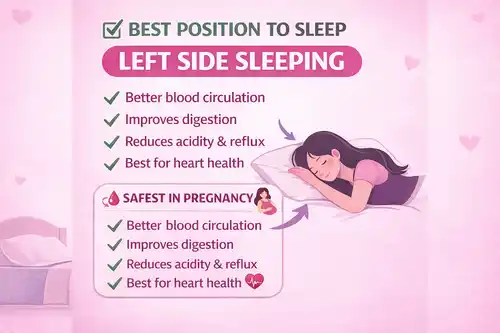
The safest sleeping position during pregnancy is the left lateral position, commonly known as SOS (Sleep on Side), preferably the left side. This position improves blood circulation to the placenta and reduces pressure on major vessels.
Benefits of Sleeping on the Left Side
- Better blood flow to placenta and baby
- Reduces swelling in legs and feet
- Prevents compression of the inferior vena cava
- Reduces backache
- Improves kidney function
Is Sleeping on the Right Side Safe?
Yes. Sleeping on the right side is also safe. The left side is just considered slightly better for circulation, but alternating sides is normal.
Sleeping Positions Trimester-Wise
First Trimester
You can sleep in any comfortable position, including on your back or stomach.
Second Trimester
Start adopting the side-sleeping habit. The belly begins to grow, and sleeping on the back may cause discomfort.
Third Trimester
Side sleeping becomes very important. Back sleeping should be avoided for long periods.
Why Sleeping on the Back Is Not Recommended After 20 Weeks
After mid-pregnancy, your uterus becomes large enough to compress the:
- Inferior vena cava (major blood vessel)
- Aorta
This may reduce blood flow to the baby and cause:
- Dizziness
- Shortness of breath
- Low blood pressure
- Back pain
If you wake up on your back, don’t worry—just turn to your side.
Best Pillow Techniques for Comfortable Sleep
- Place a pillow between your knees to reduce back strain
- Place a pillow under your belly for extra support
- Use a wedge pillow for heartburn
- Full-body maternity pillows can help side-sleeping
Tips for Better Sleep During Pregnancy
- Maintain a fixed bedtime
- Eat 2–3 hours before sleeping
- Avoid spicy or oily foods at night
- Keep your room cool and dark
- Use comfortable cotton nightwear
- Limit screen time before bed
- Practice deep breathing or meditation
How to Reduce Night-Time Discomfort
For Backache
- Use a firm mattress
- Do light stretching or cat-cow yoga
For Heartburn
- Sleep slightly elevated
- Avoid lying down after meals
For Leg Cramps
- Drink enough water
- Stretch your calves before sleeping
For Restless Leg Syndrome
- Increase iron and magnesium levels after consulting doctor
Is It Safe to Sleep on the Stomach?
In early pregnancy, yes. But after 16–20 weeks, it becomes uncomfortable. A special “donut pillow” can be used for short periods if needed.
When to Speak to Your Doctor
- Severe breathlessness at night
- Snoring with choking sounds
- Severe leg cramps
- Persistent heartburn
- Insomnia affecting daily routine
Authoritative references
Best Sleeping Positions While Pregnant-by american pregnancy association
Sleeping Positions During Pregnancy-by stanford children.org
WHO Recommendations
- Side-sleeping preferred from 20 weeks onward
- Encourage proper posture for maternal comfort
- Identify symptoms of sleep-related disorders
Learn more
Frequently Asked Questions (FAQ)
1. What is the safest sleeping position in pregnancy?
Sleeping on the left side is considered safest, especially after 20 weeks.
2. Is it harmful if I wake up on my back?
No. Simply turn to your side. This is very common.
3. Can lack of sleep affect the baby?
Mild disturbances are normal. Severe insomnia should be discussed with your doctor.
4. Are maternity pillows necessary?
Not compulsory, but they greatly improve comfort and posture.
5. When should I seek help for sleep problems?
If you experience breathlessness, loud snoring, persistent heartburn or severe cramps.
